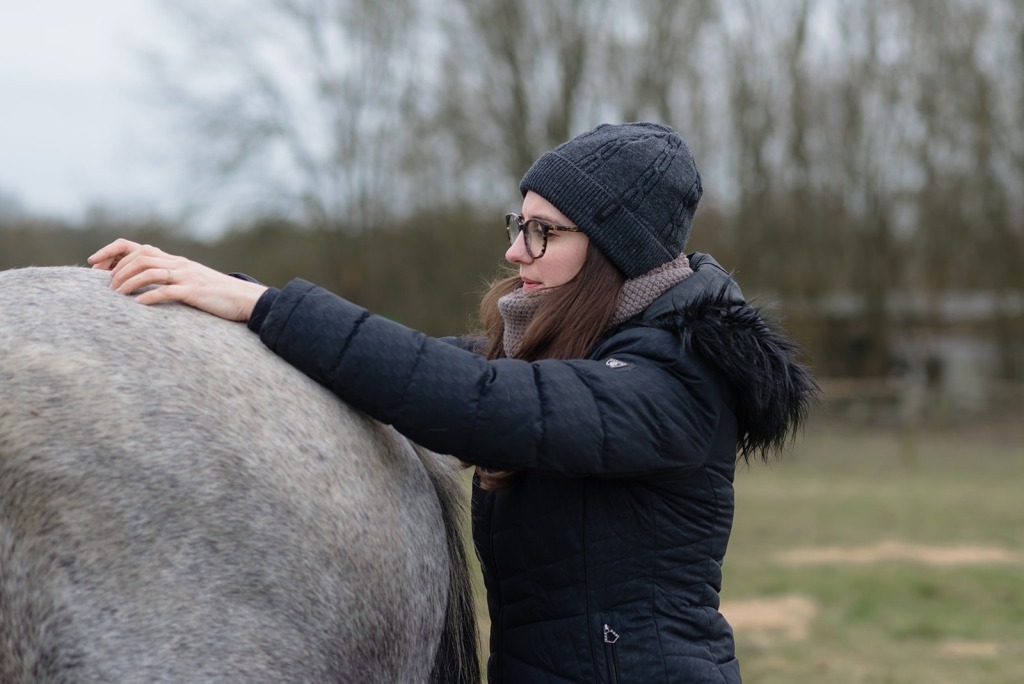
Louise’s aim during her sessions are to improve the mobility and comfort of your horse. Sessions typically last between 1 hour to 1 hour and 30 minutes, depending on how restricted your horse’s body is, and how easy/difficult the body finds it to rebalance.
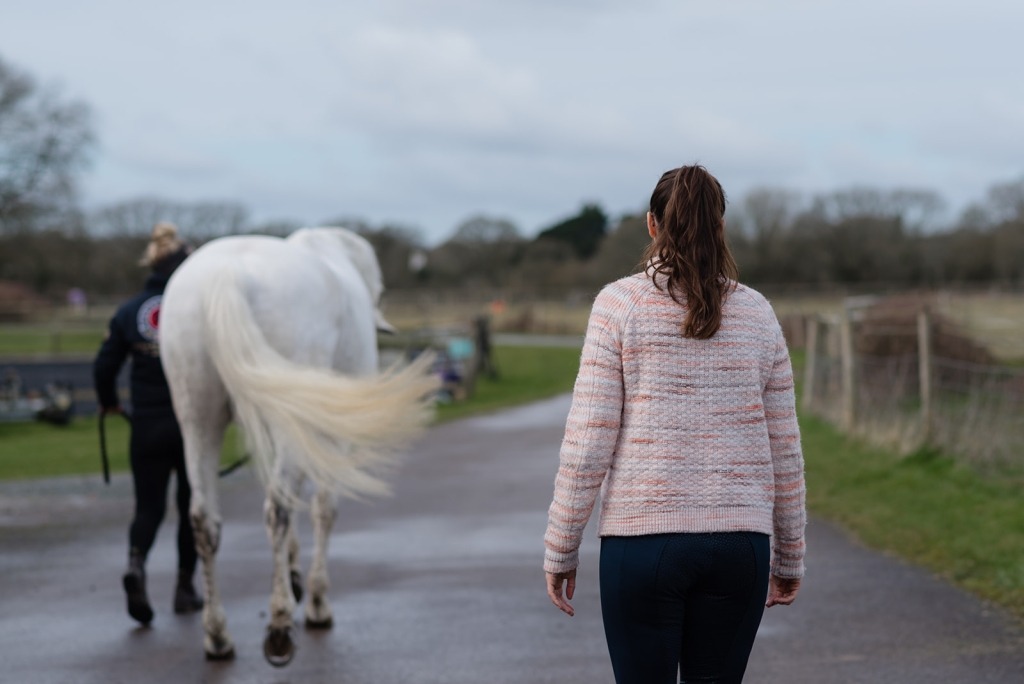
After an initial assessment – where she will evaluate joint mobility, muscle and fascia texture, abdominal tensions and craniosacral balance – Louise will see your horse walk and trot. This initial gait analysis is crucial to know how your horse organises themselves with their current restrictions.
She will then go ahead with the session, working with your horse to rebalance and release tensions found. Louise’s approach is gentle and soft, often relaxing for the horse, and brings deep changes.
The session will finish with a final walk if possible. This final walk is important to make sure your horse has incorporated the changes introduced during the session, and more importantly, observe what they think of it and how the changes makes them feel in their body.
Some Technique’s Used by Louise during an Equine Osteopathy Session
Joint Mobilisation
This technique uses repetitive motion to soften fascia, rebalance tensions in a joint and stimulate synovial fluid production.
Positional Release
A beautiful way to release tension in joints by finding and maintaining a position of ease for the horse, allowing the nervous system to leave the feedback loop it was stuck in.
Massage
A straightforward way to start to shift tissue tension, increase blood flow to an area and prepare the tissue for another technique.
Craniosacral Therapy
A light touch and powerful technique to rebalance the central nervous system, realign spinal joints, and simulate proprio and interoception.
Visceral Release
From soft massage to craniosacral touch and acupressure, Louise uses a mix of approaches to support mobility and function of the organs in the abdominal cavity.
Myofascia Release
A slow technique where the practitioner uses the various properties of fascia to change hydration levels and tensions in the fascia of the body.
Osteopathic sessions are relevant for many situations ranging from asymmetry, lack of performance and feeling like the “handbreak” is on, to diagnosed articular or back issues. If you’re not sure if equine osteopathy is relevant for your horse, get in touch to book a free assessment with Louise.
Please note: I’m an Equine Osteopath (for animals!), not an Osteopath for humans. I’m only qualified and insured to work with your horses, not you!